Global Harvest Stories
Learn about the flavour profiles, growing conditions and consumer preferences of Arabica and Robusta coffee beans!
28 January 2024 by Kronotrop
Why Arabica Beans? Are Robusta Beans Bad?
Coffee is a species in the madder family: “coffea”
About 124 coffee species have been named in the literature today. Arabica and Robusta are the two best-known and most consumed species in the world. It would be very unfair to say that one is better or worse than the other, because comparing two species with different characteristics is a big mistake; unfortunately we humans love to compare and to glorify one within the majority. Yet diversity is always something to pursue, to discover different pleasures and to learn from differences.
Arabica beans are preferred more mainly because of the complexity of their characteristics. They offer more in terms of taste, and in specialty coffee we want to bring out the beans' character, and to experience and share different tastes, by respecting the bean's character and journey from seed to cup.
This choice does not mean that Arabica beans are better and Robusta beans worse; both species can give what we would call a good or a bad harvest, depending on the seed and how it is grown.
Characteristics of Arabica vs Robusta Beans
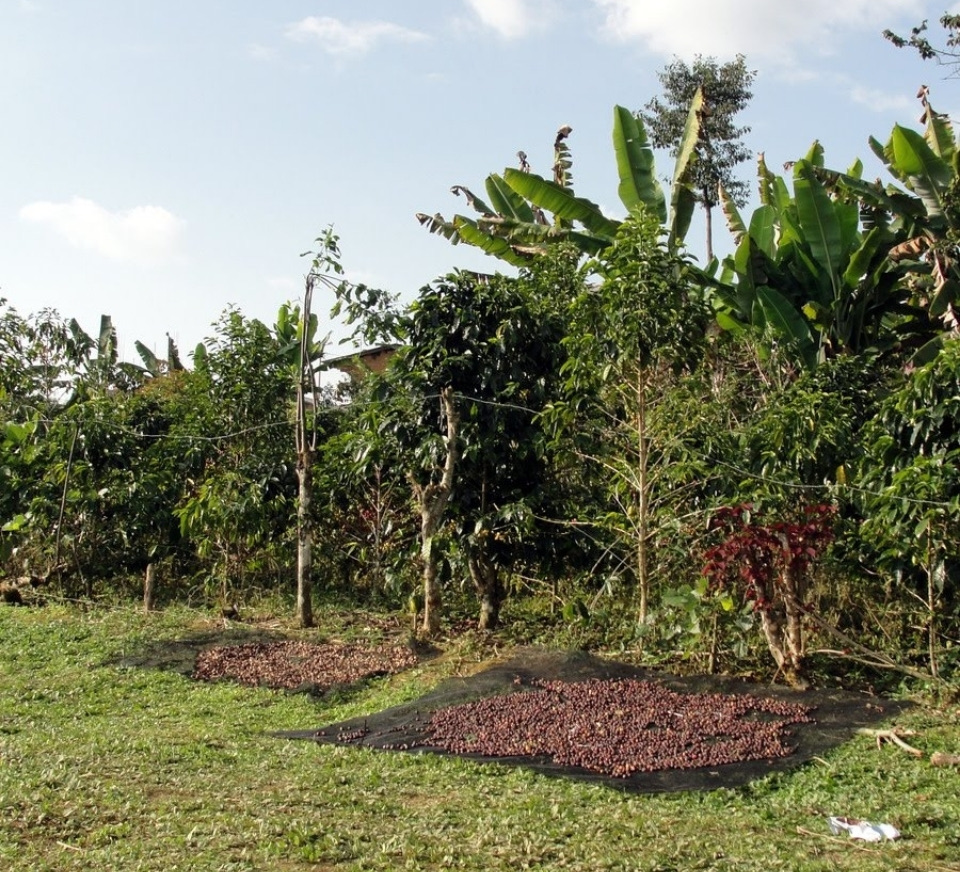
Arabica is grown at higher altitudes in cooler climates, while Robusta can be grown down to sea level. As a result, the cherries on Arabica trees ripen more slowly and later. This lets the fruit sugars mature fully and gives a rich, complex flavour profile, generally with fruity, floral, spicy and lightly acidic tasting notes. Growing this species at high altitudes and in harsh climates takes care, which makes the harvested cherries, and so the beans, of higher quality.
Arabica beans contain less caffeine, while Robusta beans contain more, almost twice as much. This gives Robusta a more bitter and intense taste. It comes from both the altitude at which they are grown and the species' genetics. Robusta beans generally show earthy, creamy and woody tasting notes. They are easier to grow than Arabica, and easier to farm. That is why Robusta beans are preferred more in the industrial market.
The price difference between the two species and the reasons for choosing them relate to many parameters like these.
Arabica (Coffea Arabica)
- Grows at higher altitudes in cooler climates
- Has a more complex aroma and flavour profile
- Has higher acidity
- Has lower caffeine content
- More oval and larger
- More delicate and harder to care for
- More expensive
Robusta (Coffea Canephora)
- Grows at lower altitudes in warmer climates
- Has a more intense, uniform aroma and flavour profile
- Has lower acidity
- Has higher caffeine content
- Rounder and smaller
- Hardier and easier to care for
- Cheaper
Varieties of Arabica Beans
Arabica beans are grown across a wide area of the world, and the best-known varieties are Geisha, Typica, Heirloom, Bourbon and SL.
- Geisha: Famous in the market, especially from Panama. Its flavour profile is floral and delicate, with complex acidity.
- Typica: A variety grown all over the world. Its flavour profile is medium-bodied and balanced.
- Heirloom: This classification, specific to coffees grown only in Ethiopia, has floral, fruity flavour profiles with lively acidity.
- Bourbon: Grown mostly in South America. Its flavour profile is sweet, with bright acidity and complex notes.
- SL: SL28 and SL34 are the best known, grown in Kenya. They usually have a fruity, spicy flavour profile with an intense, wine-like feel.
It is not right to classify the taste and tasting notes of Arabica beans by region: the seeds' genetics and the processing method shape the flavour profile, and so does the roast profile later on. Still, in essence:
- Ethiopian coffees generally have high floral and fruity notes and high acidity.
- Colombian coffees generally have mild acidity, medium body, and caramelised and fruity flavours.
- Kenyan coffees have spicy and winey grape notes and are known for their high acidity.
- Guatemalan coffees offer full body and complex flavours; you can easily find notes such as chocolate, vanilla and red fruit.
Other blog content